


In infusion care, safety and efficiency are at the heart of everything we do. Each connection and disconnection of an IV line may seem routine, but for patients and clinicians, those small moments are opportunities to prevent complications, preserve catheter integrity, protect clinicians, and deliver a positive care experience.
As an oncology nurse with more than 30 years of frontline experience, I know how much these details matter. One challenge I’ve seen time and again is the stuck luer-lockconnection. It may appear minor, but every infusion nurse has faced the frustration of twisting harder than we should—seeing a patient wince or resorting to makeshift tools that risk damaging the line. These “small problems” take a toll on both patients and clinicians and create inefficiencies that ripple across the care system.
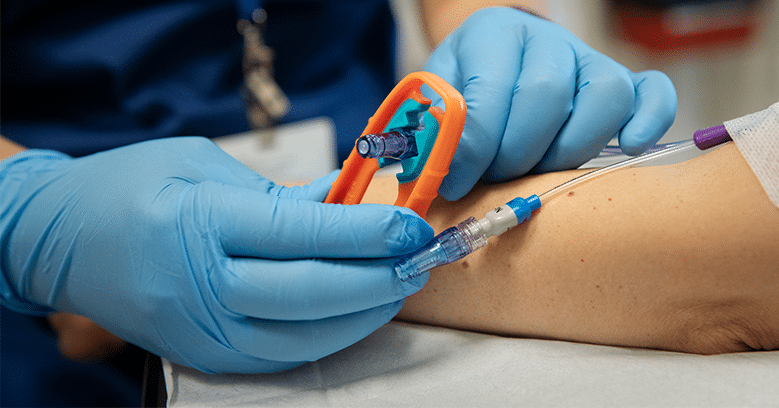
Recognizing this recurring challenge inspired the development of Yewtwist—a simple, nurse-led innovation designed to make IV and feeding tube disconnections safer, easier, and more consistent. Its elastomer gripping jaws provide firm hold without damaging lines, unlike metal hemostats, which are known to cause wear and cracking over time.
Why Small Problems Are Big Issues in Infusion Care
Infusion clinicians face many challenges daily—staffing shortages, reimbursement pressures, and evolving regulations. Against this backdrop, it’s easy to dismiss technical frustrations such as stuck connections as too minor to address. Yet in practice, these issues directly impact patient safety, clinician well-being, and operational efficiency.
Patient Safety and Comfort
Infusion patients already endure chronic illness, invasive procedures, and long treatment schedules. Disconnections should not add to their discomfort. Struggling with tight connections can tug at catheters, increase the risk of dislodgement, or cause line damage.
Even small amounts of force at the catheter site can compromise vascular access integrity. For patients on long-term therapy, where line preservation is critical, this can jeopardize treatment continuity. Smoother disconnections protect the line, reduce anxiety, and support a safer, more comfortable experience.
Workflow and Efficiency
Time is the most valuable resource in healthcare. A stuck connection interrupts workflow, increases frustration, and can cascade into delays. In busy infusion centers or home visits where schedules are tightly managed, those small delays add up. Simplifying routine disconnections helps clinicians maintain smoother workflows and spend more time on what matters most—direct patient care.
Cost Implications
Complications such as catheter dislodgement, unnecessary line replacements, or staff injuries carry real costs. Even minor inefficiencies—like an extra few minutes spent managing tight connections each day—accumulate across teams, facilities, and health systems. What seems like a small inconvenience can translate into significant financial impact.
Aligning With NICA’s Mission
The National Infusion Center Association (NICA) is committed to advancing safe, high-quality, cost-effective infusion care. Addressing small but persistent technical challenges directly supports that mission:
- Safe: Reducing catheter movement lowers patient risk.
- High-quality: Improving comfort and consistency enhances the infusion experience.
- Cost-effective: Avoiding complications and wasted time preserves resources and protects the workforce.
Yewtwist exemplifies how nurse-led innovation can advance these principles. By tackling a routine challenge that affects patient comfort, clinician safety, and workflow efficiency, it moves infusion care closer to NICA’s vision of a safe, sustainable, and patient-centered system.
Closing Reflection
Each connection and disconnection is more than a technical step—it is a moment of care, safety, and trust. Innovations that make these moments safer and easier strengthen that trust, protect our patients, and sustain our workforce.
Yewtwist is one example of this in action. By reducing force at the catheter site, it enhances patient safety and preserves vascular access integrity. By easing strain on clinicians’ hands, it supports well-being in a workforce under pressure. By preventing workflow interruptions and unnecessary line replacements, it contributes to greater efficiency and cost-effectiveness.
When nurses innovate, we don’t just change practice; we change lives.
Author Bio
Maria Plummer, RN, has over 30 years of experience in oncology nursing and infusion therapy. She is passionate about advancing patient safety, supporting clinician well-being, and championing nurse-led innovation in infusion care. Maria is the founder of Yewtwist, a nurse-led company focused on improving connection safety in infusion and enteral therapy.
Social Media links:
LinkedIn: https://www.linkedin.com/company/yewtwist/
Instagram: https://www.instagram.com/yewtwist/
Facebook: https://www.facebook.com/profile.php?id=61560409747334